Thursday, April 2, 2009

Elvis Presley - Teddy Bear

Hither and yon, that’s where I got this stuff from.

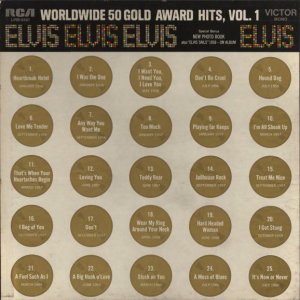
For my 23rd birthday I bought myself a copy of Worldwide 50 Gold Hit Awards, Vol 1, a 5 LP set, chronicling Elvis’ hits from heartbreak Hotel in 1956 until Kentucky Rain in 1970. It is the record that I said in my last post did not exist. But it is limited, going only up until 1970, and having a limited selection.

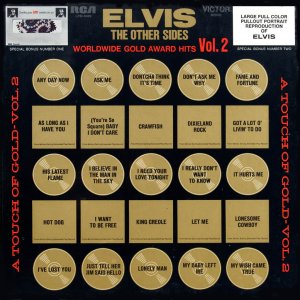
Later I got the next volume called The Other Sides - Worldwide 50 Gold Hit Awards, Vol 2, whose title isn’t all that accurate, the selection is kind of random, and not arranged chronologically.

There are many Elvis chart hits that have never been anthologized. I put this together from the 2 sets described above, from various re-issued singles, budget reissues (Almost In Love, Flaming Star), best ofs (Golden Records vol 1 – 50, Pure Gold), and first run LPs, soundtracks and all (Spinout, GI Blues, Girl Happy, Pot Luck etc etc).


Elvis Presley:


I Forgot To Remember To Forget – Released in the summer of 1955. The b-side of the last single released by Sun Records. Loping country, Elvis style…Included on the 1959 album A Date With Elvis.
Heartbreak Hotel – The song that changed everything. Written by Mae Axton (Hoyt’s mother), Elvis recorded this with the Sun guys (Scotty Moore, Bill Black, D. J. Fontana) but they couldn’t get the ambience of Memphis. That didn’t stop it from going to number 1 in the spring of 1956, recouping the entire cost that RCA paid Sun for Elvis’s contract, and kicking off the rock & roll phenomenon at a level where everyone became aware of it…
I Was The One – The B side of Heartbreak Hotel sees Elvis’ girl going off and using all his tricks on someone else. The Jordinaires show up here for the first time. A hit in its own right, spring ’56.
Blue Suede Shoes – Elvis’s first LP had 6 tracks that were recorded for Sun before he joined RCA, but this wasn’t one of them. Nonetheless, it comes closer to the Sun spirit than either side of his first RCA single. Released on a EP also, The song reached number 20 in the spring of ’56. The original, or course, was by Sun labelmate Carl Perkins.
Tutti Frutti – Elvis doesn’t make you forget Little Richard, but he does make you forget Pat Boone. Another track from the same EP, and from his first LP.
Just Because – The Shelton Brother did this about 10 years earlier, and it may has well have been 100 years. They sounded like something out of Deliverance. Elvis sounds like he’s wearing blue suede shoes. A Sun recording, from his first album.
I’ll Never Let You Go (Little Darling) – Another song recorded for Sun, but released only by RCA. Kind of a ballad. Speeds up at the end. From Elvis Presley
Trying To Get To You – Yet another Sun recording, yet again included on his first album. This song of perpetual search and longing was also recorded by Ricky Nelson, by Roy Orbison, and by Kate & Anna McGarrigle.
Blue Moon – Elvis, Scotty & Bill recorded this in Memphis, and it sounds like it was recorded in the darkest night, when the moon was indeed blue. The Marcels did a doo-wop version in 1963, and Bob Dylan put it on Self Protrait in 1970. The Cowboy Junkies’ version, on The Trinity Sessions, sounds very much inspired by Elvis. From Elvis Presley.
I Love You Because – Another track from his first LP, another Sun recording, another ballad. Al Martino put this on the chart in 1963.
I Want You, I Need You, I Love You – Elvis’ second hit single. It’s slow but I would hesitate to call this a ballad. Reached number 1 in the summer of 1956.
My Baby Left Me – Another Arthur Crudup song. Recorded for RCA but sounds like it could have been recorded at Sun. The B side of I Want You, I Need You, I Love You, it reached number 31 on Billboard in the summer of 1956. Creedence Clearwater Revival did a knock-em-dead version on Cosmo’s Factory in 1970.
Don’t Be Cruel – Number 1 in the fall of 1956. Elvis sings about cruelty, the subjective cruelty that comes from insecurity, but Elvis sounds anything but insecure. The bass lead by Bill Black off the top is one of the great moments of rock and roll.
Hound Dog – The flip of Don’t Be Cruel, also number 1, a bit earlier than Don’t Be Cruel. This was a song by Leiber & Stoller, originally recorded by Big Mama Thornton, and Elvis pulverized the lyrics, which is surprising, given that he sang Big Joe Turner and Little Richard verbatim. Eric Clapton restored the lyrics on his Journeyman album.
Love Me Tender – Elvis first real famous ballad has a demo quality to it – Just Elvis, a barely strummed guitar, and the occasional hum by The Jordinaires. Love songs don’t come simpler than this. Number 1 in the fall of 1956.
Any Way You Want Me (That’s How I Will Be) – The flip of Love Me Tender reached number 20 in the fall of 1956. Elvis sings his heart out convincing his one true love that he will change to suit her temperament. Doesn’t work like that, though his career was indeed something like that…
Rip It Up – Little Richard. This is from Elvis’s second album, Elvis, released in October, 1956. Elvis has his own take on Little Richard, which isn’t frantic savagery like the original, but carries its own authority in its own way.
Love Me – A ballad, kind of like Love Me Tender, but with a bit more flesh. Reached number 2 in late 1956. Also on Elvis.
When My Blue Moon Turns To Gold Again – Another track from Elvis and on the same EP as Love Me, this is another song that recalls the Sun sound. Another one in the top 20.
Paralyzed – Yet another track from the same LP / EP. Reached number 59 on the top 100 at the end of 1956. I don’t believe that anyone left Elvis paralyzed…
Old Shep – A song about a dog, totally over the top. From Elvis.This tragic tale reached number 47 in December 1956.
Let Me – Well, let me what? Have another dance with you. This sounds like a polka. A polka? Well that is definitely an accordion accompanying our star. This is from an EP called Love Me Tender, released in November, 1956, as are the next two tracks. And they were all featured in Elvis’ first movie, Love Me Tender.
Poor Boy – Same accordion, which didn’t stop it from reaching the top 30 in December, 1956. Who needs money when you have love. A bit disingenuous, Elvis singing about being poor…
We’re Gonna Move – The title conjures up images of dancing, but it’s about moving to a new house. At least he dispensed with the accordion for this one.
Playing For Keeps – A ballad in the Love Me style. Elvis protests his undying commitment. From winter, 1957.
Too Much – This was a biggie, reached number 1 in the winter of 1957. The A side of Playing For Keeps.
All Shook Up – One of Elvis’ signature song. What better description of being in love could there be. And I love the way he squeezes “her lips are like a volcano when it’s hot” into one line. Number 1 in the spring of 1957.
That’s When Your Heartaches Begin – Elvis is betrayed by his friend, who steals his girl. He is quite dramatic in the telling of it. The b side of All Shook Up reached number 58 in its own right.
Have I Told You Lately That I Love You – Elvis does a fairly conventional version of this chestnut. It comes from an EP called Just For You, and was featured on Loving You, released in July 1957.
(There’ll Be) Peace In The Valley (For Me) – This was the beginning of Elvis’ career as a gospel singer. He made 3 gospel albums, not counting Christmas albums, and some scattered songs here and there. Peace In The Valley, which Elvis does straight as an arrow (Johnny Cash did it too, but he should have stuck to trains), reached the top 30 in the spring of 1957. It is from the EP Peace In The Valley, which also featured (It’s No Secret What God Can Do), I Believe, and Take My Hand Precious Lord.
Let Me Be Your Teddy Bear – The idea of Elvis as a teddy bear was obviously absurd, but it worked on some level, taming the beast I guess, and the song went to number 1 in the summer of 1957. Featured on the Loving You album.
Loving You – The b side of Teddy Bear. Given how much money Elvis’ records were earning by this point, it is nothing short of amazing how restrained, nay muted, these productions are. From the summer of 1957.
Mean Woman Blues – From the LP Loving You. The devil woman syndrome. Roy Orbison covered this.
Got A Lot O’ Livin’ To Do – From Loving You.
Lonesome Cowboy – This doesn’t sound much like a typical Ghost Riders In The Sky cowboy lament, but it does have the clip clop percussion and the whistling. From Loving You.
Hot Dog – An expression of joy, not about food. From Loving You.
Jailhouse Rock – Another of Elvis’ signature songs. This song about incarceration is one of his best party records. “Number 47 said to number 3, you’re the cutest jailbird I ever did see…” Worthy of Little Richard, I’d say. Number 1 in the fall of 1957.

Wednesday, April 1, 2009

Elvis Presley - Good Rockin' Tonight

My in-laws walked into the house one day excited, because they’d been listening to the car radio and they heard a recording of Elvis singing Grenada. They’d never liked Elvis, but after hearing him do Grenada, they realized what a talented singer he was. Hmm I said. I’ve never heard Elvis do Grenada. Are you sure it was Elvis? Maybe be it was Frankie Laine, I suggested, helpfully. Oh no, it was Elvis, they said. Hmmm…

It was a book I found at the St. James Library, Elvis, The Illustrated Record, that confirmed what I’d believed. The book listed every recording Elvis ever released, in chronological order. No Grenada. That is the power of Elvis. Even his non-existent recordings leave an impression…

But the book was key. I went through it, and I used it to make this collection, a best-of by Elvis Presley, his hits and highlight b sides, album tracks, and EP tracks, in order of release. It’s a collection that RCA never made. It’s an idea that RCA never used. For all the Gold’s, Legendary Performances, box sets, and anthologies, not one does a chronological career survey. Pathetic? I’d say so.

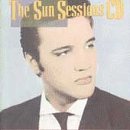
This is part one. Everything here comes from The Sun Sessions CD.


Elvis Presley:


That’s All Right – Recorded in Memphis at Sun Records and sold later to RCA, like the rest of the entries here, this obscure blues by obscure blues singer Arthur Crudup got catapulted to immortality when it ended up being Elvis’ first single.. What better place to start. Three of them, Elvis on rhythm guitar, Scotty Moore on lead guitar, and Bill Black on bass, and they made more sound, and more meaningful sound, than all the metal bands in the world put together. Rod Stewart recorded this, and so did Paul McCartney. Had Elvis not recorded it, neither would they have. Bob Dylan recorded it but never officially released it; it can be had on bootlegs. Elvis’s record was released in the summer of 1954, but didn’t show up on an album until For LP Fans Only in 1959. That was RCA…
Blue Moon Of Kentucky – This was the B side By the great Bill Monroe, whose version was in waltz time. Elvis’ recording was nothing short of a revolution. Appeared on A Date With Elvis in 1959.
Good Rockin’ Tonight – Elvis rocks out like nobody’s business, on his second Sun single. The song was by Roy Brown, and Pat Boone messed it up, though Paul McCartney did a respectable version. Elvis proves that he is, indeed, a might mighty man. On A Date With Elvis.
I Don’t Care If The Sun Don’t Shine – The music mattered. This is the B side of Good Rockin’ Tonight. Hit the top 100 (from an EP) in the fall of 1956.
Milkcow Blues Boogie – Listen to Ricky Nelson do this, and you’ll get why Elvis was special. This is Elvis’ third single. It is on A Date With Elvis.
You’re A Heartbreaker – Elvis sings about love revenge like nobody else. With Bill Black clack clack clacking on the bass they didn’t need drums…On For LP Fans Only.
Baby Let’s Play House – Indeed. Come back, sings Elvis. Come back, I wanna play house with you. John Prine recorded this as Pink Cadillac. On A Date With Elvis.
I’m Left, You’re Right, She’s Gone – Drums on this one, by D. J. Fontana. Here Elvis sings of heartbreak, but he has such authority that his heartbreak is another man’s triumph. On For LP Fans Only,
Mystery Train – Single Number 5 and the last one for Sun. Elvis sings about death, and he sings with such authority and abandon that the devil doesn’t stand a chance. The song is by Junior Parker, and was covered later by Paul Butterfield Blues Band and by The Band. Turned up on For LP Fans Only.

Sunday, March 29, 2009

Jerry Vale

Jerry Vale was the consummate easy listening artist, not exactly a crooner – his voice was too big for that – but all his songs are slow and arranged with big big orchestration. His voice is a tenor of near operatic quality.
Vale put 9 songs on the top 100 between 1956 and 1966. I got one from somewhere or other, and 4 more are on this album, Jerry Vale’s Greatest Hits, which was released in 1961. Where did I get it? Probably from Pyramid Records.


Jerry Vale:


Pretend You Don’t See Her – Insecurity, pride, hurt, pain, it’s all here. Smile, sings Jerry, and pretend to be gay. Not what he means. A hit from late in 1957.
Go Chase A Moonbeam – I listened to the butterfly, sings Jerry. Ok. From the fall of 1958.
Innamorata (Sweetheart) – Major love song. Vale sings in an almost operatic tenor. This was a hit in the winter of 1956. Dean Martin also put it on the charts.
Go – One of those the-temptation-is-getting-too-strong songs. True love waits for tomorrow…
Prima Donna – Not to be confused with Donna The Prima Donna by Dion.
And There Is My Beloved – How many guys introduce their girlfriends / wives like that??
Two Purple Shadows – He didn’t realise how he felt until he saw her with someone else. And all he saw was the shadows (think Silhouettes by The Rays or Delilah by Tom Jones). Jerry has been stood up, finds that his girl is with someone else, and walks away with a heart that is utterly and completely shattered…
You Don’t Know Me – From the fall of ’56. Classic ballad. The ultimate expression of the barrier between the me you know, and the me I wish you knew. Elvis covered this, and so did Ray Charles.
If – Not the Bread song…
Enchanted – Not The Platters song. At last you surrender to me, sings Jerry, and together we share ecstasy.. Really. That’s pretty graphic if you ask me…
And No One Knows
Have You Looked Into Your Heart – Trying to revive a lapsed romance. This was a hit in the winter of 1965, and the style has not changed much from his 50s hits.


Frankie Lymon & The Teenagers

This was a Rhino album, The Best Of Frankie Lymon & The Teenagers. I picked it up at the HMV store that was next door to the office where I worked, back around 1994 – 95. It was a small store, and very mainstream, and it was unusual to find Rhino there, but there you have it…
Frankie Lymon was the Michael Jackson of his day, 13 years old when Why Do Fools Fall In Love hit, early in 1956. He had a brief run of fame and fortune, and by 1968 he was dead of a drug overdose, his career having been stalled since around 1960.


Frankie Lymon & The Teenagers:


Why Do Fools Fall In Love – Here is where, early on its history, rock and roll (come R & B, but same universe) waxes philosophical. Why does the rain fall from up above, asks young Frankie. He was 13 years old when he sang this, setting the precedent for Michael Jackson, who would debut 13 years later. The Beach Boys did this, and so did Gale Storm, and The Diamonds, and Diana Ross, and Joni Mitchell, and Sha Na Na. Nobody did it like Frankie Lymon. A hit in the winter of 1956.
I Want You To Be My Girl – A bold statement. No pussy footing around. “Come on baby let’s go downtown.” What greater statement of romantic intent could there be? From the spring of 1956.
I’m Not A Know It All – A ballad, and kind of another version of the Wonderful World idea that Sam Cooke expressed so eloquently.
Who Can Explain? – A Why Do Fools Fall In Love rewrite, the lyrics, same philosophical bent, the tune. Who can explain. Not The Who…
I Promise To Remember – This features some of the greatest doo wop stuff in the repertoire. Song was a hit in the summer of 1956.
The ABC’s Of Love – From the fall of 1956. How big a step from this the ABC by the Jackson Five?
Share – The essence of love perhaps, right here. “I’d share this moment with you” sings Frankie. Isn’t that what it’s about?
I’m Not A Juvenile Delinquent – A strange sentiment for a love song. But really this was an “answer song” to all the critics of rock and roll
Baby, Baby – Love by numbers, not unlike We Got Love by Bobby Rydell.
Paper Castles – The prototype. Stevie Wonder did Castles In The Sand, and so did Seals & Crofts (a different song). And Don McLean did Castles In The Air. But The Teenagers were there before anyone.
Teenage Love – I guess given the name the name of the group, this song title is more personalized than it would otherwise be. Still, it’s all about carrying books and the like…
Out In The Cold Again – Here is where Frankie sings a ballad. He had, I will say, an amazing voice…
Goody Goody – More MOR, with a kind of big band arrangement, this, and it was apparently a solo recording, though it’s not clear from Whitburn. A hit in the summer of 1957.
Creation Of Love – Another ballad to end the proceedings. One of those magical moment songs, totally bogus lyrics, but still a slow dance worth considering…

Saturday, March 28, 2009

Carl Perkins

Rockabilly was the rural face of rock and roll, which was, it seems, by its nature, the most urban of musics. And Carl Perkins was the most public face of rockabilly.

Given his status as a legend, it’s amazing how few hits he had - 3 on Sun, 2 on Columbia. But that’s how it is. This collection is his Sun recordings, which was a small part of his career, but the biggest part. It’s called Original Golden Hits, released by the Shelby Singleton Corporation, the company that bought out Sun Records, and I got it at the Country Music Centre.


Carl Perkins:


Blue Suede Shoes – “Don’t you step on my blue suede shoes” – one of the great refrains of rock and roll. This was the first track on the first Elvis ablum, and it’s a rather ironic twist to the history of rock and roll that this song has always been more closely associated with Elvis than with Perkins, notwithstanding the fact that Perkins wrote it, recorded first, and had the bigger hit. The song encapsulated, in its portrayal of the rock and roll kid, all fashion and attitude, the pheneomenon of rock as style, a consistent reality from then till now, though the blue suede shoes gave way to blings. A hit in the winter of 1956.
Boppin’ The Blues – 12 bar blues, rockabilly style. I love you baby, sings Carl, but I must rhythm bound. Bop cat bop. From the summer of '56.
Lend Me Your Comb – Ah the old story, gotta get home, it’s getting late, make myself look decent. There is a version of The Beatles doing this in the Star Club in Hamburg.
Only You – The Platters, hillbilly style…
Tennessee – A brag in song. So Carl plays up all those great things about Tennessee, especially the music, and throws in the atomic bomb towards the end. Hard to know how to take that. I was in Tennessee once, I was about 14, drove through with my family, was in Nashville, Chattanooga, didn’t spend much time.
Honey Don’t – Life with a perverse woman. The Beatles covered this on Beatles ’65, Ringo sang.
Matchbox – The Beatles did this one also, also with Ringo singing, this time on Something New.
Dixie Fried – Let’s all get Dixie fried yells Carl. No one was ever more serious about having fun than Carl…
Right String Baby But The Wrong YoYo – Great analogy. Gerry & The Pacemakers covered this.
Everybody’s Trying To Be My Baby – The perils of being a celebrity. The Beatles covered this on Beatles ’65, George singing this time.
Your True Love – Carl’s love song is music of great celebration. The message is I love you, you love me, let’s dance! From the winter of '57.

Friday, March 27, 2009

Louis Armstrong

Louis Armstrong puts me in mind of Albert Einstein. Einstein wrote his theory of relativity when he was in his 20s, and he spent the rest of his life trying to figure out where to go next. Satchmo’s moment of glory lasted longer, a few decades, but by the time Hello Dolly! hit number 1 in 1964, he had done what he had to do, with nothing left of prove
Everything that you hear, if it’s jazz, and much of what isn’t jazz, owes its existence to Louis Armstrong; John Coltrane, Glenn Miller, Oscar Peterson, Wynton Marsalis, and on and on. Ok, so he basically invented the whole world of jazz improvisation. But more than that, as Dave Marsh says in his description of Wonderful World, “His use of his voice as a medium for emotional effects, damn the niceties, helped set the stage for a rock and soul generation that sometimes seemed to offer nothing but such displays.” I wouldn’t say ‘emotional displays” though; I would say “human heart.”

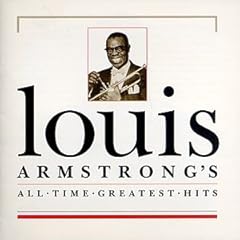
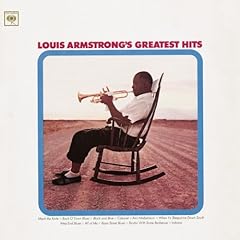
There are three collections here. The first was on a label of dubious legality, but the recordings seem legitimate enough; and it covered his music from the 1920s to the 1940s; the second was a prerecorded tape copy of Louis Armstrong’s Greatest Hits, featuring his Columbia recordings from the 50s; and the third was Louis Armstrong’s All Time Greatest Hits, which brings us into the 60s. All three were library copies, but the last was touch and go. I had it on hold for so long that my hold finally expired. I guess they’d lost the copy, but I guess they got a new one, because I did get my hands on it at some point.




Louis Armstrong:


Cornet Chop Suey – Chop suey suggests food chopped into little pieces. And so it is, Satchmo plays his cornet and each note has its own nutritional value, and contains a universe of sound unto itself. The idea of infusing faux Chinese culture in to popular music forms would pop up now and then, think Ling Ting Tong by The Five Keys. This is from 1926. Recorded by Louis Armstrong & His Hot Five
Potato Head Blues – No relation, one suspects, to Mr. Potato Head. From 1927, Louis Armstrong & His Hot Seven
Tiger Rag – Louis Armstrong & His Orchestra from 1930. Recorded later by Les Paul & Mary Ford.
Big Butter And Egg Man – The double entendres are flying fast and thick. By Louis Armstrong & His Hot Five from 1926, vocals by Louis Armstrong and May Alix.
When It’s Sleepy Time Down South – Black musicians’ relationship with the south has always been something like a love-hate one. There is always more going on than the simple lyrics would have us believe. Louis Armstrong & His Orchestra from 1941. An actual singing vocal by Armstrong.
When You’re Smiling – A very famous song by Charlie Chaplin. Only Satchmo could pull this off without sounding hokey. Louis Armstrong & His Orchestra from 1929
On The Sunny Side Of The Street – From 1935, again Louis Armstrong & His Orchestra
Solitude – Ditto.
When The Saints Go Marching In – This probably started the tradition of performing this as a jazz / rock number. It is Louis Armstrong & His Orchestra and it is from 1938.
Ain’t Misbehavin’ – Ditto again. This is the great Fats Waller song. I always liked Leon Redbone’s version.
Jeepers Creepers – One of those songs that becomes part of the popular culture well beyond the significance of the immediate context. This is Louis Armstrong & His Orchestra from 1939.
I Want A Little Girl – Not surprisingly, he is talking about a romantic partner, not a daughter. He is back to being Louis Armstrong & His Hot Seven. This is from 1946
Someday You’ll Be Sorry – Louis Armstrong & His All Stars from 1947.
Lazy River – A hit for Si Zentner in 1961, and Bobby Darin did it. This is The All Stars from 1948.
I Love Jazz – From 1958.
Mack The Knife (A Theme From The Threepenny Opera) – Unlike most of the contemporary versions, Satchmo sings it, and it was about 3 years before Bobby Darin got hold of it, but Darin owns it. From the winter of 1956
Back O’ Town Blues
Blueberry Hill – From the fall of ’56, more or less contemporary with Fats Domino’s version. Recorded, though, in 1950.
(What Did I Do To Be So) Black And Blue – A rare song of racial awareness. Van Morrison covered this on Magic Time. This is odd coming from Louis Armstrong, whose statements tended to musical, not lyrical.
Basin Street Blues
Cabaret – The song from the play / movie.
All Of Me – The best version of this song is probably by Dinah Washington.
Struttin’ With Some Barbecue
Indiana – A real jazz rave up. And well, no, I’ve never been to Indiana…
That Lucky Old Sun – Some people have a hard life. I prefer Ray Charles’ version.
I Still Get Jealous – Love songs tend to be about young love, new love, falling in love, infatuation. It’s rare to hear a song like this about an old married couple, and how they still have it for each other. I think also of Let’s Chase Each Other Round The Room Tonight by Merle Haggard – different style, same message.
Hello, Dolly! – And so the guy who invented jazz back in the 20s was back at number 1 in the spring of 1964, competing with The Beatles, The Stones, The Animals, et al, with a song that was totally retrograde…
What A Wonderful World – No relation to Wonderful World by Sam Cooke. This song was released in 1968 and reached number 1 on the UK charts; then, in 1988, after being featured prominently in Good Morning Vietnam, it found its way into the Billboard top 30. The song is a simple child’s view of the wonder of the world, and Satchmo’s gritty delivery keeps from being maudlin; on the contrary, his voice lends reality to the Hallmark lyrics.
Muskrat Ramble – Made famous by The Andrews Sisters, the tune was borrowed by Country Joe McDonald for Feeling-Like-I’m-Fixing-To-Die Rag

Wednesday, March 25, 2009

Edmund Hockridge

Edmund Hockridge was a Canadian singer, who made it big in England in the 1950s. He had quite the career, and what’s interesting is that he died 11 days ago as I write this, which was my birthday.


Edmund Hockridge:


Young And Foolish – A lush ballad that presents romance as a big mistake, though one that’s good while it’s on. A UK hit in the winter of 1956.
No Other Love – The follow-up to Young And Foolish.
 
Locations of visitors to this page